
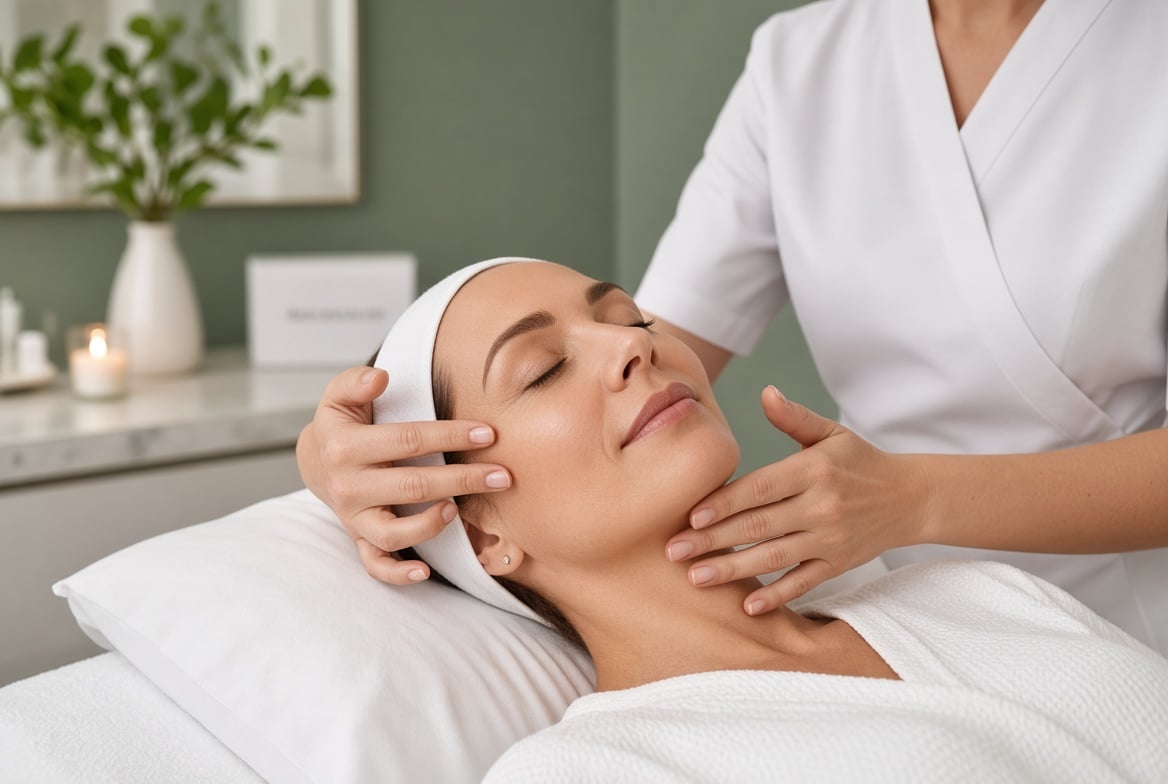
In the pursuit of firmer, more luminous, and resilient skin, regenerative treatments such as RF Microneedling[7], peptide-rich protocols, and biostimulatory approaches have become central to advanced aesthetics. Yet outcomes can remain limited when the underlying lymphatic system is not functioning optimally.
At A Silent Moment Organic Spa in Long Beach, we view lymphatic support as an essential foundation of regenerative skin wellness. The lymphatic system regulates fluid balance, immune response, and cellular waste clearance.[1][2] When it functions well, it helps create a more favorable internal environment for the skin's natural repair processes and for advanced regenerative treatments.[3][4]
Key Takeaways
- The facial lymphatic system plays a critical role in fluid balance, inflammation resolution, and tissue homeostasis.[2][4]
- Gentle facial lymphatic techniques may temporarily reduce the appearance of ordinary cosmetic puffiness and support a calmer tissue environment.
- Supporting lymphatic function can help reduce chronic low-grade inflammation and create conditions more conducive to collagen and elastin maintenance.[3][4]
- Clinical evidence is strongest for lymphatic drainage in supporting recovery and reducing edema after procedures.[5][6]
- Results for cosmetic concerns are temporary and individualized.
A Brief Look at Facial Lymphatic Anatomy
The lymphatic system of the face and neck is a network of superficial vessels and nodes that work quietly beneath the skin. Lymphatic capillaries begin in the interstitial spaces of the dermis and collect excess fluid, proteins, and cellular by-products. These vessels drain toward regional lymph node groups, including the pre-auricular, submandibular, and cervical nodes, before returning fluid to the bloodstream.[1][2]
Unlike the circulatory system, the lymphatic system does not have a central pump. Movement of lymph relies on gentle pressure changes, muscle activity, and the rhythmic contraction of lymphatic vessels.[1] When this flow becomes temporarily sluggish in the superficial facial tissues, mild congestion and a puffy appearance can result.
Understanding this anatomy helps explain why manual lymphatic techniques use light, slow, rhythmic movements oriented along natural drainage pathways rather than deep pressure.
Why the Lymphatic System Matters for Skin Quality and Regenerative Work
Research has highlighted the active interaction between lymphatic vessels and skin regenerative processes. Efficient lymphatic clearance helps maintain tissue homeostasis by removing excess fluid and inflammatory mediators.[3][4] When this system functions well, the tissue microenvironment becomes more supportive of normal repair, barrier function, and matrix maintenance.
Supporting healthy lymphatic flow may contribute to:
- Reduction of chronic low-grade inflammation
- A more favorable environment for collagen and elastin maintenance
- Enhanced skin-barrier integrity
- Improved tissue comfort and microcirculation
These effects help explain why optimizing lymphatic function is increasingly viewed as a foundational element that can amplify the results of regenerative treatments.
How Lymphatic Support Interlinks with Tissue Recovery, Inflammation & Advanced Aesthetics
Tissue Recovery
After any form of tissue stress, including aesthetic procedures, excess fluid and inflammatory by-products can linger in the interstitial space. Efficient lymphatic clearance helps remove these elements, supporting a cleaner, more comfortable recovery environment.[4] This is one reason lymphatic support is valued in post-procedure settings, always under appropriate guidance.[5]
Reducing Low-Grade Inflammation
By facilitating the movement of fluid that contains inflammatory proteins and cellular debris, lymphatic techniques may help shift the tissue toward a more resolved, less congested state. A calmer tissue environment is generally more conducive to normal repair processes.[4]
Supporting the Collagen and Elastin Environment
While manual lymphatic drainage should not be positioned as a direct collagen-stimulating treatment, a less inflamed and less congested tissue environment is more favorable for normal collagen maintenance and matrix health. Optimized lymphatic flow contributes to better overall tissue quality and resilience, creating supportive conditions for advanced regenerative work.[3]
Amplifying Advanced Aesthetic Treatments
Optimal lymphatic function supports regenerative therapies by improving the tissue microenvironment. Efficient fluid clearance and reduced inflammation may enhance the local conditions in which peptides, growth-factor signaling, and collagen-remodeling processes, such as those stimulated by RF Microneedling[7] or Garden of Youth protocols, occur. This is why many clients at A Silent Moment incorporate lymphatic support alongside advanced regenerative services.
Understanding Cosmetic Puffiness vs. Medical or Post-Surgical Concerns
Mild facial fullness or temporary puffiness, for example morning under-eye fullness or post-travel softness, is different from medically significant swelling or post-surgical edema.
Sudden, one-sided, red, warm, painful, rapidly increasing, or persistent swelling should be evaluated by a healthcare professional. Post-surgical lymphatic drainage is a specialized clinical situation that should be directed by the treating physician or a qualified therapist working within medical instructions. A Silent Moment focuses on ordinary cosmetic concerns and supportive wellness care.

What Facial Lymphatic Techniques May Offer
When the concern is mild and cosmetic:
- Temporary improvement in the appearance of ordinary facial fullness
- A deeply relaxing, rhythmic experience
- Support for a calmer, less congested feeling in the tissues
- A complementary foundation that may enhance the tissue environment for regenerative protocols
These techniques are light, slow, and controlled. They are not intended to permanently reshape the face, remove fat, or deliver structural lifting.
Who Benefits Most?
Facial lymphatic support may be particularly relevant for clients who:
- Notice mild morning or lifestyle-related facial fullness
- Want a calming, non-aggressive treatment experience
- Are preparing for or recovering from advanced regenerative treatments
- Seek to support overall skin comfort and tissue quality
- Prefer a holistic approach that complements their facial protocols
What to Expect in a Session
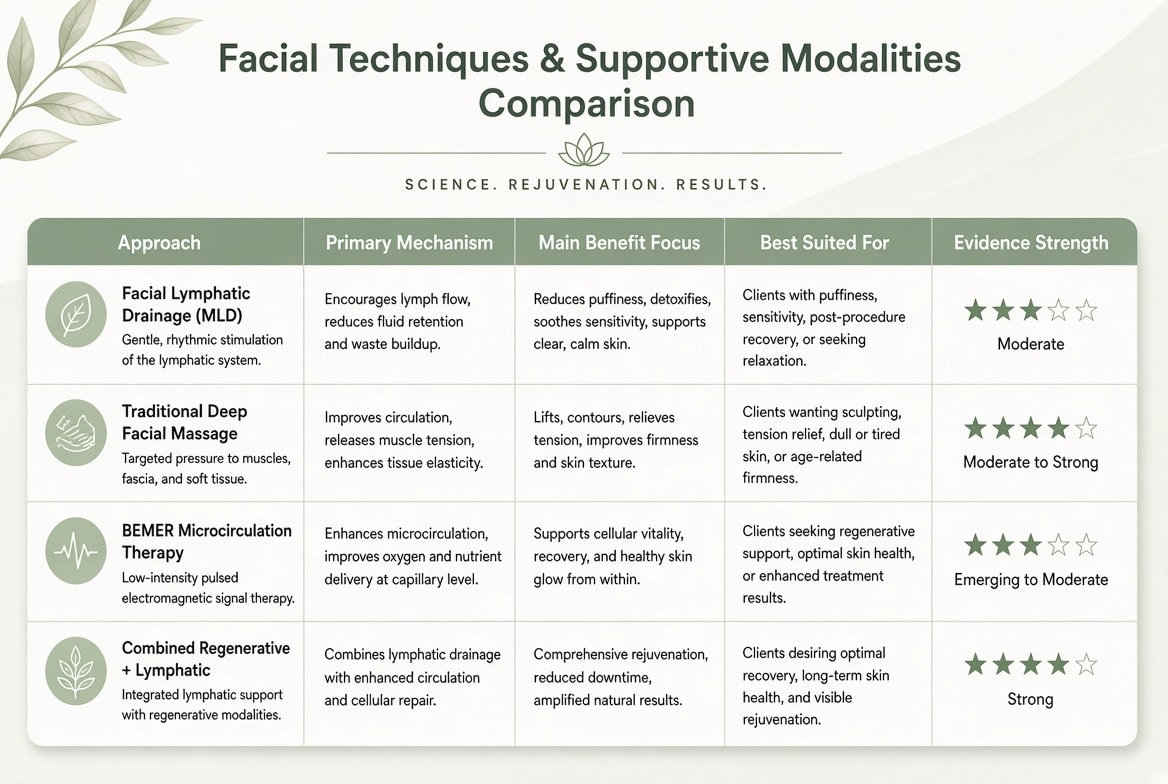
A typical facial lymphatic session at A Silent Moment is gentle and rhythmic. The therapist uses light, precise movements along natural drainage pathways of the face and neck. Many clients describe the experience as deeply relaxing. The session can be performed on its own or thoughtfully sequenced with complementary modalities such as Infrared Sauna, BEMER, or Red Light Therapy when appropriate.
Consistency and Long-Term Skin Vitality
While a single session may offer temporary improvement in the appearance of mild fullness and a sense of calm, the broader benefits of supporting lymphatic function are best realized through consistent, personalized care. Just as regenerative treatments work progressively, lymphatic optimization is most effective when integrated into an ongoing skin wellness strategy.
A Note on Results
Any visible change in ordinary cosmetic puffiness is expected to be temporary. Individual responses vary based on the reason for the fullness, lifestyle, hydration, sleep, and personal physiology. We focus on realistic expectations and creating supportive conditions for skin vitality rather than guaranteed structural outcomes.
Frequently Asked Questions
Does facial lymphatic drainage permanently slim the face?
No. Any reduction in the appearance of puffiness is temporary.
Can it reduce inflammation?
By supporting the clearance of fluid that contains inflammatory mediators, it may help create a calmer local tissue environment.[4]
It is not a treatment for medical inflammatory conditions.
Does it boost collagen production?
It should not be claimed as a direct collagen-stimulating treatment. Supporting healthy fluid dynamics and reducing unnecessary inflammatory burden may contribute to a more favorable environment for collagen and elastin maintenance.[3]
Is this the same as deep facial massage?
No. Lymphatic techniques use significantly lighter, slower, and more rhythmic movements oriented toward fluid pathways.
When should I see a doctor?
Seek medical care for sudden, painful, one-sided, red, warm, persistent, or unexplained swelling.

Experience the Lymphatic Advantage in Long Beach
At A Silent Moment Organic Spa, we integrate lymphatic intelligence into our regenerative approach. Whether you are seeking temporary support for mild cosmetic fullness, enhanced recovery comfort, or a complementary foundation for advanced regenerative treatments such as our Garden of Youth protocols or RF Microneedling.
We invite you to explore how facial lymphatic drainage and our broader lymphatic-supported wellness offerings can support your skin's vitality, resilience, and long-term quality.
Contact A Silent Moment Organic Spa to discuss which approach fits your current skin and wellness goals.
Sources and References
- Ozdowski L, Gupta V. "Physiology, Lymphatic System." StatPearls. View source.
- Feely MA, Olsen KD, Gamble GL, Davis MD, Pittelkow MR. "Cutaneous lymphatics and chronic lymphedema of the head and neck." Clinical Anatomy. 2012;25(1):72-85. View source.
- Ter-Ovanesyan I, Tashjian M, Escruceria S, et al. "An Update on the Role of Lymphatic Function in Skin Inflammatory Disorders: A Scoping Review." Cureus. 2025;17(1):e77981. View source.
- Schwager S, Detmar M. "Inflammation and Lymphatic Function." Frontiers in Immunology. 2019;10:308. View source.
- Klein I, Tidhar D, Kalichman L. "Lymphatic treatments after orthopedic surgery or injury: A systematic review." Journal of Bodywork and Movement Therapies. 2020;24(4):109-117. View source.
- Thompson B, Gaitatzis K, Janse de Jonge X, Blackwell R, Koelmeyer LA. "Manual lymphatic drainage treatment for lymphedema: a systematic review of the literature." Journal of Cancer Survivorship. 2021;15(2):244-258. View source.
- U.S. Food and Drug Administration. "Microneedling Devices: Getting to the Point on Benefits, Risks and Safety." View source.